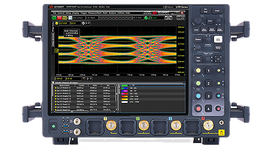
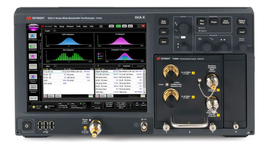
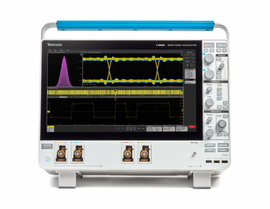
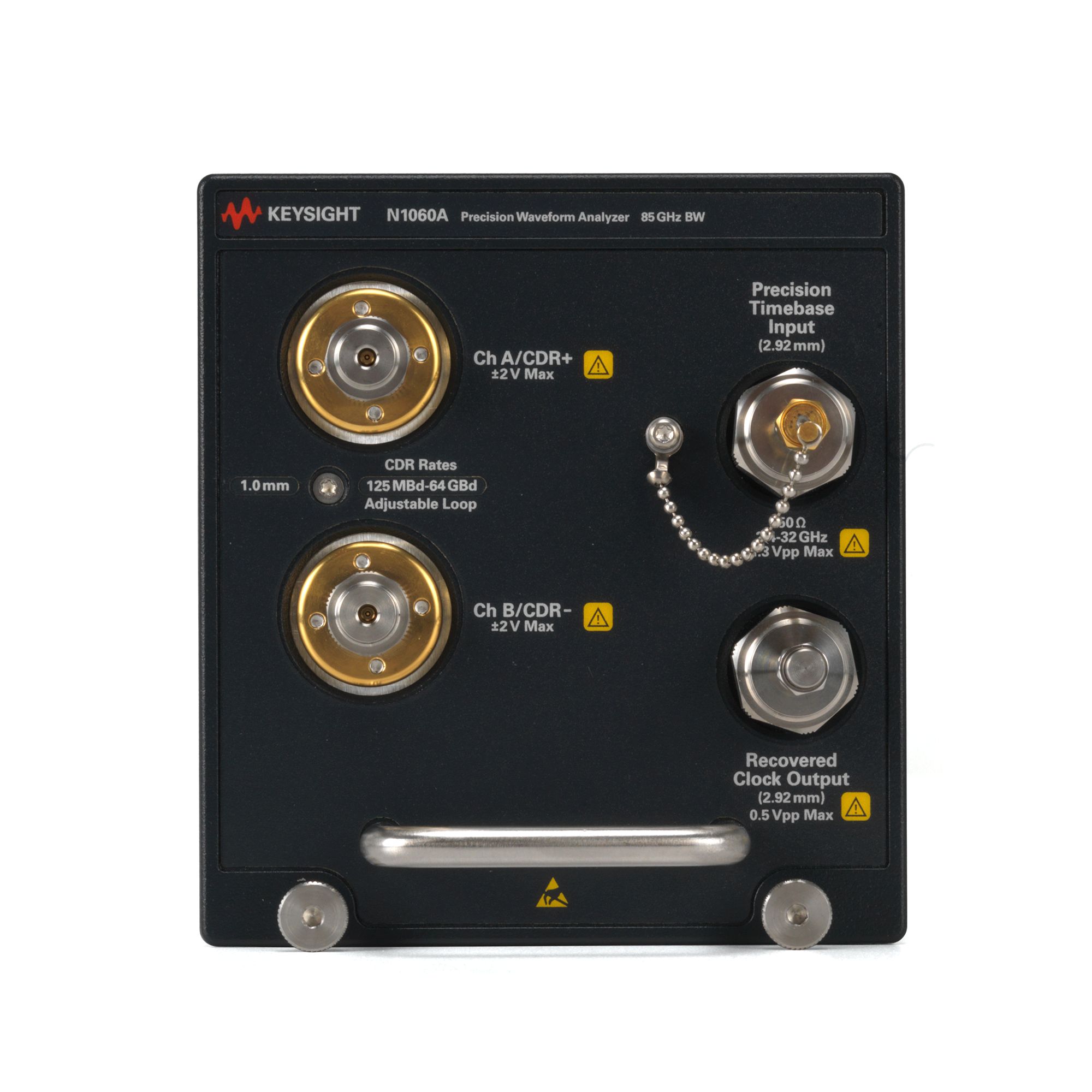
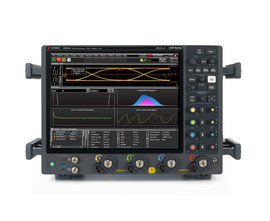
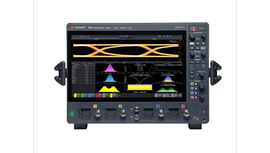
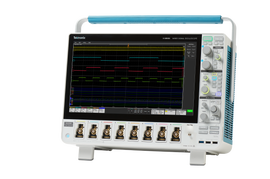
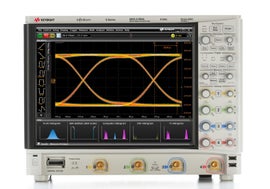
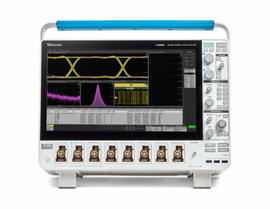
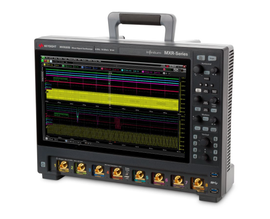
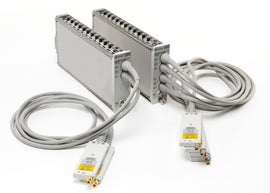
Oscilloscopes and logic analyzers give engineers the visibility they need to troubleshoot circuits, debug embedded systems and analyse high-speed signals with confidence.
From real-time oscilloscopes for capturing transient events to logic analyzers for digital debugging, Electro Rent provides equipment to support a wide range of applications and performance requirements. Oscilloscopes from leading manufacturers such as Keysight Technologies, Rohde & Schwarz and Tektronix can be selected based on factors including bandwidth, channel count, sample rate and memory depth.
For short-term projects, field testing or additional lab capacity, teams can rent an oscilloscope without committing to equipment they may only need temporarily. For ongoing testing needs, engineering and procurement teams can buy certified pre-owned oscilloscopes from Electro Rent’s inventory.
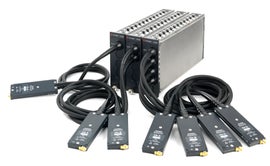
Logic analyzers support digital debugging, timing analysis and protocol validation across complex digital systems. Depending on project duration and utilisation, customers can rent or buy a logic analyzer that matches their testing requirements.
Oscilloscope prices and logic analyzer prices vary depending on factors such as bandwidth, channel count, memory depth and configuration. Electro Rent’s specialists can help teams compare appropriate options to optimise equipment utilisation and budget while meeting technical performance requirements.
Need additional instruments? Explore Electro Rent’s wider test equipment rental range or contact us to discuss your project requirements.
Frequently Asked Questions
- What are the oscilloscopes used for?
Oscilloscopes are electronic test instruments with a wide range of applications in different industries including aerospace, engineering, automotive, telecommunications, medicine, and the sciences. By recording the change of a signal over a period of time and displaying the voltage graphically as a waveform, oscilloscopes allow the user to analyse a signal's time-based characteristics (frequency, period, rise time, etc.) and voltage-based characteristics (amplitude, maximum and minimum voltages, etc.). This piece of test equipment is frequently used in labs and in the field for many different purposes such as troubleshooting, validation, and manufacturing test.
- How can I use an oscilloscope to measure frequency?
If you are using a modern digital oscilloscope, the instrument will automatically calculate frequency for you as long as it has the bandwidth to reliably do so.
On an analogue scope you can measure frequency by first measuring time using the horizontal scale on the display and counting the number of horizontal divisions in one wave. Then, calculate the period of the signal by multiplying the number of horizontal divisions by the time/division. Finally, calculate frequency by dividing 1 by the period. This will allow you to accurately determine the frequency of the waveform.
- Why choose a used oscilloscope?
Electrical testing equipment can be expensive; it is hard to get the best new equipment on a tight budget. Fortunately, a more cost-effective option is the purchase of a used oscilloscope. We carefully select and test each pre-owned scope in a rigorous certification process to ensure that our used oscilloscopes are just as accurate and effective as brand-new ones so you can enjoy top-quality equipment at a low price.
- Where can I buy a used oscilloscope?
We offer a range of flexible options giving you access to the equipment you need at an affordable price. Top-of-the-range digital oscilloscopes are expensive, so if you are working with a tighter budget you might choose to buy a used oscilloscope. We also offer a rent-to-buy option, hire purchase, or operational leases to give you the financial flexibility you need.
- Which is the best oscilloscope to buy?
This depends entirely on your needs and budget. However, if you are looking for a reliable and high-quality oscilloscope, we recommend opting for one by Keysight Technologies, Rhode & Schwarz, or Tektronix. While analogue oscilloscopes can be good enough for hobbyists, the majority of our offerings are digital oscilloscopes which provide more accuracy and precision.
When choosing an oscilloscope, you will need to consider three things: bandwidth, sampling rate, and number of channels.
- Bandwidth: the maximum level of frequency the device can measure. Depending on the bandwidth of the signal you want to measure, you will need a scope with a suitable bandwidth capacity in MHz or GHz.
- Sampling rate: the number of samples of a signal generated per second. A higher real-time sampling rate means greater accuracy from your device
- Number of channels: while traditional oscilloscopes feature two channels, the newer digital oscilloscopes often have more than this.
- What is a digital oscilloscope?
Digital oscilloscopes are an advanced and highly accurate type of oscilloscope. These are more advanced than analogue scopes, which use an electron beam to directly map the input voltage to the display as a waveform. To find the values for amplitude, frequency, and more, analogue oscilloscopes require you to do the calculations yourself based on the waveform.
In contrast to their analogue counterparts, digital oscilloscopes (sometimes called digital storage oscilloscopes, digital sampling oscilloscopes, or DSOs) can do these calculations for you. They use an analogue-to-digital converter to turn the analogue signal into a digital signal and instantly make measurements that can be easily stored in the scope’s digital memory or uploaded to a computer.
- What is the sample rate and memory depth, and why do they matter?
The higher the sample rate (in GSa/s), the more accurately the oscilloscope captures fast signals. Memory depth defines the amount of data that can be stored per acquisition, important when you want to capture long sequences of a signal without losing any details.
- How many channels do I need in an oscilloscope?
Most people begin with 2 or 4 channels, if you're analyzing several signals or working with complex embedded systems, you may need an oscilloscope with 8 or more channels. Increased number of channels are needed to take measurements in parallel as for system level debug.
- What types of probes should I use with an oscilloscope?
Selecting the appropriate probe is critical for accuracy. Solutions include passive probes (for general-purpose use), active probes (for high-frequency or low-capacitance feedback conditions), differential probes (for floating or high-voltage signals), and current probes (for analysis of power and current).
- Can oscilloscopes decode serial protocols like I²C, SPI, or CAN?
There are a lot of digital oscilloscopes that can decode protocol. These can be extremely useful for embedded systems developers who need to debug serial communications on the waveform itself.
- Can I connect the oscilloscope to a PC for remote control or data logging?
Most modern oscilloscopes come with USB, LAN, or GPIB connectivity for interfacing. They are remotely controllable and can be combined with software for data analysis, automation, long-term waveform logging etc.
- Are portable or handheld oscilloscopes available?
Yes. Most labs are set up with benchtop oscilloscopes, but portable or handheld oscilloscopes are recommended for engineers who need to take them into the field or wherever they need to go to check signals and be mobile at that location.